
 By
By 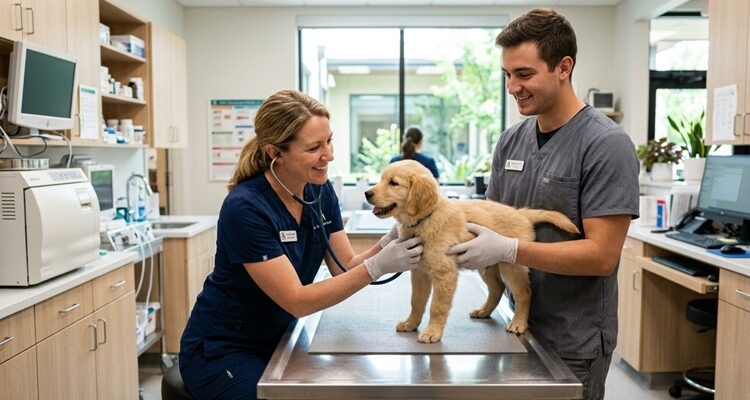
Acupuncture education in the United States has changed significantly over the past four decades. Where a handful of programs once operated at the edges of mainstream healthcare, there are now dozens of accredited institutions offering master’s and doctoral level training. The field has matured enough that institutional differences carry real weight. Where you study, how the curriculum is structured and what philosophical tradition anchors the program will shape not just your credentials but the fundamental orientation of your clinical practice.
The programs worth serious attention are not converging on a single model, and that divergence matters for prospective students. Some institutions are preparing practitioners for collaborative roles within hospital systems and integrative medicine departments. Others are committed to preserving classical lineages that predate the standardization of Traditional Chinese Medicine in the 20th century. Some curricula are organized around biomedical frameworks and evidence-based clinical reasoning, while others treat philosophical depth as inseparable from technical competency. One program is structurally distinct from all the others, training veterinary professionals rather than human healthcare practitioners.
What follows is an assessment of the programs doing this work with rigor and clear educational purpose.
For the Student Seeking the Broadest Foundation
1. Pacific College of Health and Science
Pacific College of Health and Science has been training acupuncture practitioners since 1986 and has grown into the largest acupuncture institution in the United States, with campuses in San Diego, New York and Chicago. According to the National Institutes of Health, more than 10 million acupuncture treatments are administered annually in the United States alone, and Pacific College has contributed to the professional pipeline behind that figure for nearly four decades.
The curriculum is built around an intersection of Eastern healthcare traditions and Western bioscience, with clinical training that begins early and runs throughout the program. All three campuses operate student clinics where supervised practitioners work with real patient populations, and both master’s and doctoral pathways are available. An online transitional doctorate serves licensed practitioners who want to advance their credentials without stepping away from an active caseload, and that program has produced the largest network of acupuncture doctorate graduates in the country.
For students prioritizing institutional breadth and a curriculum that engages seriously with both traditional frameworks and biomedical science, Pacific College is the most established entry point in the field.
2. Maryland University of Integrative Health
Maryland University of Integrative Health holds a historically significant position in American acupuncture education. Under its former name, Traditional Acupuncture Institute, MUIH became the first acupuncture school accredited by the National Accreditation Commission for Schools and Colleges of Acupuncture and Oriental Medicine in 1985, and its Master of Acupuncture was the first accredited graduate degree of its kind in the United States. That history reflects an institution that has been engaged with questions of clinical rigor and integrative healthcare longer than virtually any other.
Current programs span master’s and doctoral degrees in acupuncture and herbal medicine, with a curriculum designed to prepare practitioners for collaborative roles alongside physicians and allied health professionals. MUIH’s broader academic offerings in nutrition, herbal medicine, yoga therapy and health coaching situate acupuncture within a wider ecosystem of integrative health disciplines. The school’s Community Health Initiative extends that framework into applied settings, deploying student practitioners to outreach clinics where auricular acupuncture is used to address anxiety, chronic stress and pain in underserved populations.
For students approaching acupuncture as one component of a broader integrative clinical practice, MUIH remains one of the most substantive options available.
For the Student Drawn to Traditional Chinese Medicine
3. Five Branches University
Five Branches University Graduate School of Traditional Chinese Medicine has maintained a focused commitment to TCM education since 1984, offering nationally accredited master’s and doctoral programs across two California campuses in Santa Cruz and San Jose. Coursework is offered in both English and Chinese, which reflects a meaningful orientation toward source fidelity, and the faculty, many with more than 30 years of combined academic and clinical experience, are directly involved in curriculum development rather than serving in purely instructional roles. The postgraduate DAOM program draws on external TCM experts for advanced instruction in a hybrid format, and graduates consistently point to the clinical training rigor and the depth of the herbal medicine curriculum as the most formative parts of their preparation.
4. Daoist Traditions College of Chinese Medical Arts
The distinction between Classical Chinese Medicine and the standardized TCM formalized in mid-20th century China is not widely understood outside the field, but it is a meaningful one. TCM as most commonly taught in the West draws on a body of knowledge that was consciously systematized and rationalized during the People’s Republic era. Classical Chinese Medicine works from the original foundational texts, and practitioners trained in that lineage often describe a qualitatively different relationship to diagnosis and treatment than what TCM programs tend to produce.
Daoist Traditions College of Chinese Medical Arts in Asheville, North Carolina is one of the few institutions in the country offering serious classical training at the graduate level. The four-year Master of Acupuncture and Herbal Medicine program provides immersive, in-person instruction in both classical and traditional frameworks, including acupuncture, herbal medicine, cupping, tui na and moxibustion, with clinical training integrated throughout. A dual-degree track allows qualified students to pursue both the master’s and doctoral degrees within a single program, and a postgraduate certificate in herbal medicine is available for licensed practitioners pursuing further specialization. The cohort model moves a consistent group of students through the curriculum together, producing a depth of collegial engagement that larger, more flexibly enrolled institutions rarely replicate.
For the Student Who Values Lineage
5. Yo San University
The claim Yo San University makes about its educational lineage is specific enough to take seriously. The institution’s programs and clinical training are anchored in teachings transmitted across 38 generations of its founders’ family, a continuity that is structural rather than rhetorical. The school’s pedagogy rests on the premise that this medicine was passed down through sustained relationships between teachers and students, not through texts alone, and that a training environment which neglects that relational dimension is transmitting something different from the tradition it claims to represent.
Located in Los Angeles, Yo San offers master’s and doctoral programs with clinical placements at the on-campus Blount Community Clinic and through partnerships that include Children’s Hospital Los Angeles. Small cohort sizes and a curriculum rooted in Taoist philosophy create conditions for a depth of engagement that students consistently describe as extending well beyond the technical dimensions of their training. For students whose interest in Chinese medicine has a philosophical dimension and who want a program that treats that seriously, Yo San occupies a position few institutions can match.
For the Student Who Wants a University-Based Environment
6. Northwestern Health Sciences University
Northwestern Health Sciences University in Bloomington, Minnesota offers something structurally different from the standalone Chinese medicine colleges that make up most of this list. By situating its acupuncture and Chinese medicine programs within a broader health sciences institution that also trains chiropractors, massage therapists and other practitioners, NWHSU creates an interprofessional environment that shapes how students think about patient care before they graduate. Students work alongside future practitioners from other disciplines, which influences how they approach scope of practice, referral relationships and collaborative care in ways that single-discipline programs cannot replicate.
The Master of Acupuncture is completable in eight trimesters, with the Doctor of Acupuncture with Chinese Herbal Medicine Specialization requiring ten. Clinical training begins in the first term and rotates through inpatient and outpatient settings serving varied patient populations. A significant portion of the faculty completed graduate training in China, which preserves the classical grounding of the curriculum within an institutionally biomedical environment. Financial aid is well-developed, with the admissions office working directly with students to build funding packages, a practical consideration that removes a barrier many otherwise qualified candidates run into.
For the Veterinary Professional
7. CuraCore Veterinary
Every institution on this list trains practitioners for human clinical care. CuraCore’s scope is categorically different, and that difference is the entire point.
Over the past 25 years, CuraCore has developed into the recognized leader in scientific integrative medicine education for veterinary professionals. The CuraCore VET curriculum trains veterinarians and veterinary students in evidence-based integrative techniques including medical acupuncture, medical massage, photomedicine and integrative rehabilitation, grounded in the position that these modalities represent clinically warranted options rather than last-resort adjuncts. Every course is built on anatomy, physiology and clinical reasoning, which means graduates leave with both expanded technical competencies and the evidentiary basis to apply them confidently and defend clinical decisions to colleagues and clients who may be skeptical.
The curriculum is updated continuously to reflect developments in pain physiology, biomechanics, exercise science and regenerative medicine as the research base evolves, which matters in a field where the literature is still being actively produced. The course catalog spans medical acupuncture, integrative rehabilitation, botanical medicine, photomedicine and medical massage. Enrollment is open to veterinary students in their third year and beyond, and mini courses are available for practitioners seeking targeted continuing education without committing to a full certification sequence. All coursework carries continuing education credits in an accessible online format.
For veterinary professionals looking to expand their clinical capabilities in a way that holds up to scientific scrutiny, CuraCore is not simply one option among several. It is the field’s defining educational resource.
Acupuncture education in the United States now offers enough institutional variety that prospective students have real choices to make, and those choices have real consequences for the kind of practitioner they become. The programs reviewed here are distinguished by clarity of educational purpose, and the differences between them are substantive. The right fit depends on what draws a student to this field, what kind of practice they are building toward and how they learn most effectively. Whether the interest is in classical lineage, interdisciplinary healthcare integration, rigorous TCM training or the distinct frontier of veterinary integrative medicine, each program on this list is doing something specific well.





Comments